
A dog seat belt for a large dog isn't just another accessory you pick up at the pet store—it's a critical piece of safety gear, just like yours. Think of it this way: these specialized restraints are designed to do for your dog exactly what your own seat belt does for you. They keep your best friend from becoming a dangerous projectile in a sudden stop and, just as importantly, keep them from distracting you while you drive.
Why Your Large Dog Needs a Car Safety Harness
Let's be honest, driving with a big dog can feel like having a furry, four-legged cannonball in your back seat. One minute they're snoozing peacefully, the next they're trying to climb over the console for a better view. While it’s cute, it’s also incredibly dangerous for everyone in the car.
Imagine your 80-pound Golden Retriever is just chilling in the back. If you have to slam on the brakes at only 30 mph, the force of that impact can turn your beloved pet into a projectile weighing thousands of pounds. This isn't just a risk to your dog; it's a life-threatening hazard for you and your passengers. A proper dog seat belt for large dogs is built to prevent this exact scenario.
A Critical Shift in Mindset
It's time we start thinking about car safety for our pets the same way we do for our kids. We wouldn't dream of letting a child ride without a car seat, yet many of us let our large dogs roam free in a moving vehicle. That inconsistency puts them in serious danger.
The bottom line is simple: A restraint system is non-negotiable. It's the most responsible choice you can make to ensure your best friend is protected on the road, turning every trip into a safe one.
A standard human seat belt is completely wrong for a dog's body and can cause severe internal injuries in a crash. A specialized car safety harness, however, is engineered to distribute those forces safely across their strongest points. Getting familiar with the basics of dog harness safety is the first step toward becoming a responsible pet traveler.
More Than Just Crash Protection
Beyond collision safety, a good car restraint offers a few other key benefits that make for a safer, more pleasant drive for everyone. A secured dog is often a calmer dog.
Here’s why it’s so important:
- Reduces Driver Distraction: A secured dog can't jump into the front seat, block your mirrors, or get under your feet. An unrestrained pet is one of the top distractions for drivers, and it only takes a second for things to go wrong.
- Prevents Escape After an Accident: If a crash does happen, a panicked and possibly injured dog could bolt from the car right into traffic. A harness keeps them safely inside the vehicle until help can arrive.
- Creates a Calm Environment: For anxious travelers, the feeling of being securely held by a harness can be incredibly calming. It helps them settle down and feel more grounded during the ride.
Ultimately, choosing to use a dog seat belt for your large dog is an act of love. It’s an acknowledgment that their safety is just as important as any other family member's. It's not about restriction; it's about protection.
The Unseen Dangers of Unrestrained Car Travel
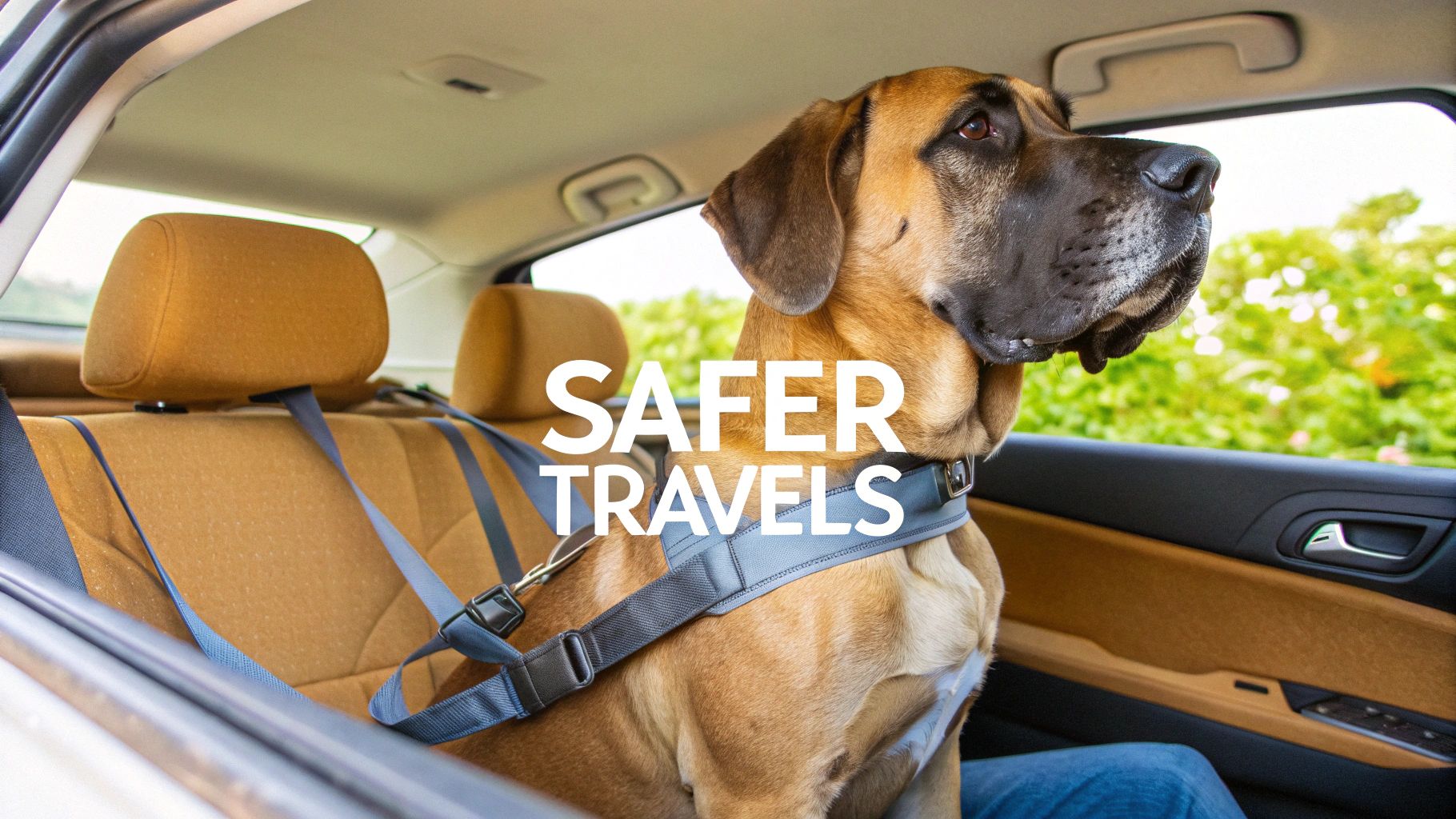
Letting your big dog roam free in the car feels like part of the fun of having a dog, right? Windows down, ears flapping in the wind. But that picture-perfect moment hides a serious risk that can materialize in a split second. The hard truth is that car travel is governed by physics, and once you understand the forces at play, a proper restraint starts to feel less like a restriction and more like a non-negotiable part of responsible pet ownership.
Think about your 70-pound Golden Retriever sitting happily in the back seat. You’re just cruising through town at 30 miles per hour. Suddenly, a car pulls out in front of you and you slam on the brakes. The laws of motion take over instantly. Your beloved dog doesn't just slide forward; they become a projectile, carrying all the forward momentum of the car.
In that scenario, your 70-pound dog can hit whatever is in front of them with an impact force of over 2,100 pounds. Let that sink in. It’s the equivalent of a small cow slamming into the back of your seat, or worse, into a person. This isn't just hyperbole; it's the sobering math that underscores the hidden danger of every single car ride.
The Projectile Risk to Human Passengers
During a collision, an unrestrained large dog instantly becomes the most dangerous object in the vehicle. While you and your family are held securely by seat belts, your dog isn't.
This is how simple fender-benders turn into tragedies. The most common injuries people suffer in accidents involving pets are from the pet itself being thrown forward. They can strike the driver, causing a complete loss of control, or hit passengers with devastating force.
A dog seat belt for large dogs does more than protect your pet; it acts as a safety barrier for every human in the car, preventing your furry friend from becoming an unwilling source of harm.
It’s a critical point that so many loving dog owners miss. Securing your dog is just as fundamental to your family's safety as buckling your own seat belt.
Devastating Consequences for Your Dog
For an unrestrained dog, the outcome of an accident is almost always catastrophic. A sudden stop can send them flying into the dashboard, against a seat, or even through a window. The injuries are often grim, ranging from broken bones and severe internal trauma to immediate fatalities.
Even a minor accident can cause serious harm, like whiplash, joint dislocations, or concussions. The statistics are just as stark. Studies on pet-related accidents estimate that a staggering 84% of dogs are injured in vehicle collisions when they aren't restrained. That number plummets when a proper dog seat belt for large dogs is used, showing just how much of a difference one piece of gear can make. You can dive deeper into these pet travel safety findings to see the data for yourself.
The Distraction Danger
Beyond the brutal physics of a crash, an unrestrained dog is a constant, immediate threat: distracted driving. A big dog moving around your car is a magnet for your attention, pulling it away from where it needs to be—the road.
We’ve all seen it, or maybe even experienced it:
- The Sudden Lunge: A squirrel catches their eye, and they leap for the window, blocking your mirror or knocking the gear shift.
- The Affection Seeker: They decide right now is the perfect time for a head scratch and try to climb into your lap in the middle of traffic.
- The Anxious Barker: Traffic gets heavy, they get nervous, and suddenly you have a loud, frantic bark right in your ear.
- The Footwell Wanderer: They slip down into the driver's footwell, getting tangled around the pedals just when you need to brake.
Every one of these scenarios can—and does—cause preventable accidents. A good restraint system keeps your dog comfortably and safely in one spot, eliminating these risks entirely. It frees you up to put 100% of your attention on driving, giving you peace of mind that your best friend is truly safe.
Comparing Car Restraint Options for Large Dogs
Picking the right safety setup for your large dog can feel a bit overwhelming. Let's be honest, the market is flooded with options, and it's tough to know where to start. The secret is to think less about the "best" product and more about the best fit for your dog's size, their personality, and the kinds of trips you take together.
It’s like picking out a pair of shoes. You wouldn’t wear hiking boots for a walk on the beach, right? The same logic applies here. A dog seat belt for large dogs that works perfectly for a quick trip to the vet might not be the right choice for a cross-country road trip. A chill, seasoned traveler has totally different needs than a nervous dog who thinks the car is a scary metal box.
We'll break down the three main players in the car restraint game: seat belt tethers, integrated harnesses, and good old-fashioned travel crates. Each offers a different mix of freedom, security, and comfort, so you can find the perfect match for your four-legged co-pilot.
This handy image points out some of the must-have features you should be looking for in any quality restraint system.
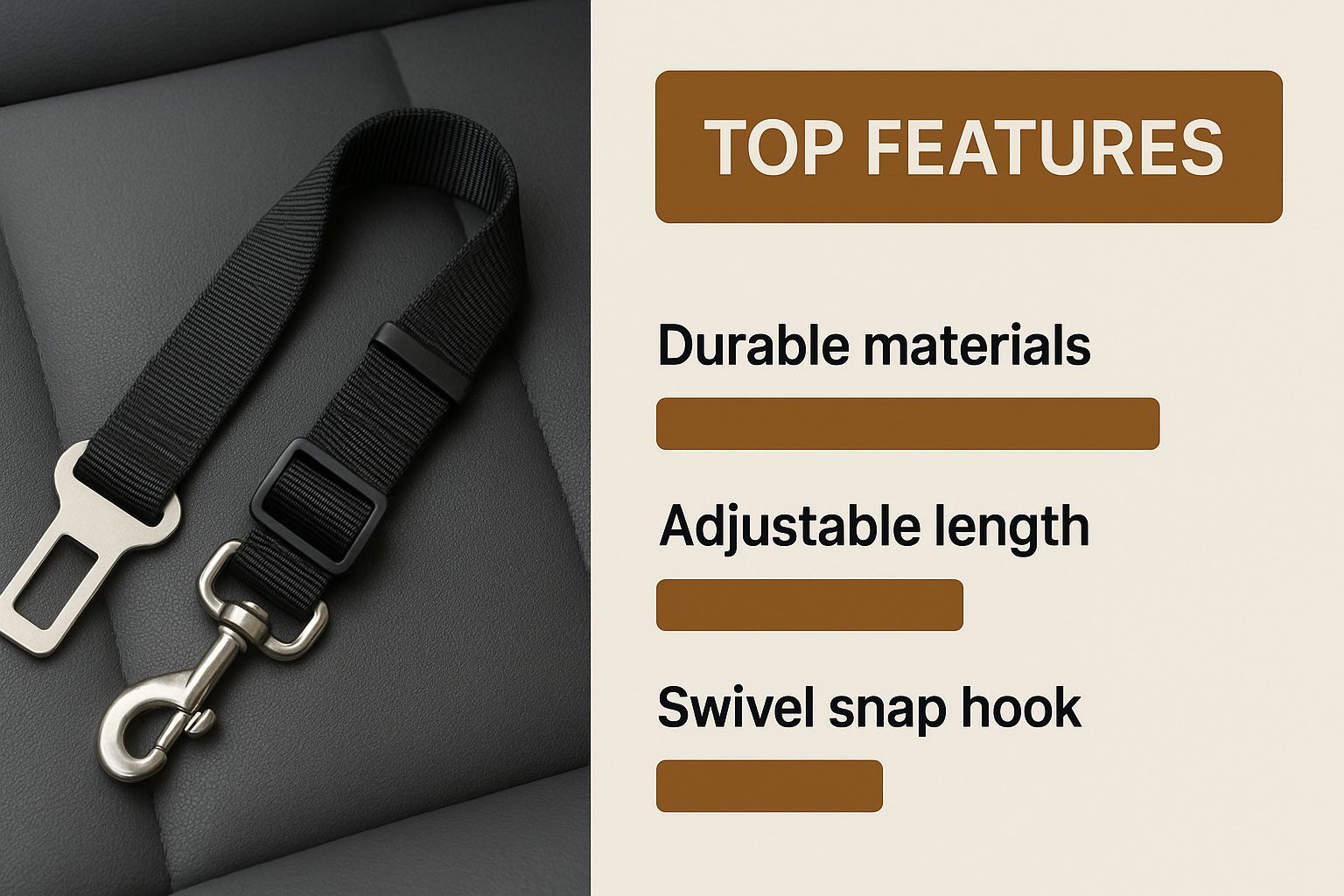
Things like a solid, beefy clip and an easily adjustable strap are non-negotiable. They're the foundation for keeping your big dog both safe and comfortable on the road.
Harness & Tether Systems
This is probably the most common and versatile setup you'll see. It's a two-part system: a tough, crash-tested harness your dog wears, plus a separate tether. One end of the tether clips onto the harness, and the other clicks right into your car's seat belt buckle. It's a fantastic balance of safety and freedom.
The biggest win here is flexibility. You can adjust the tether's length to give your dog enough slack to sit, stand, or lie down, all while keeping them from becoming a furry projectile in a sudden stop or trying to climb into your lap. For a well-behaved dog who just wants to watch the world go by, this is an excellent choice.
Integrated Harness Seat Belts
Think of this as an all-in-one solution. With an integrated system, the seat belt mechanism is built right into the harness. Instead of using a separate tether, you thread the car's actual seat belt through loops on the back of the harness, securing your dog directly against the seat.
This design usually creates an incredibly secure, snug fit and gets rid of any extra straps that could get tangled. It’s a stellar option for long road trips where you want maximum security. For dogs that get a little anxious, the snug, contained feeling of an integrated harness can be really calming—almost like a constant, gentle hug.
Secured Travel Crates
For some dogs, especially nervous travelers or those who get a little too excited in the car, a crate is the safest bet. It gives them a secure, den-like space where they can chill out, protected from all the overwhelming sights and sounds of the road. It also completely contains them, which means zero distractions for the driver.
But here’s the critical part: the crate must be secured. An unsecured crate in an accident is just as dangerous as an unrestrained dog. Use heavy-duty straps or your vehicle's cargo anchors to lock it down so it can't slide, move, or tumble.
Choosing the right system is a personal decision based on your dog's unique needs. The goal is to select a restraint that keeps them safe while also ensuring they are as comfortable and stress-free as possible on every journey.
The market for dog safety products is huge, which is great because it means there's something for everyone. Industry data shows products breaking down into a few main categories, like harness systems, simple clip tethers, and even full car seats for big breeds. Nylon is the most common material you'll see, thanks to its strength and cost-effectiveness. If you're curious, you can learn more about the dog seat belt market landscape and see what's trending.
To make things a little easier, I've put together a quick comparison table to help you weigh the pros and cons of the three main options.
Comparing Car Restraint Options for Large Dogs
This table breaks down the three main types of vehicle restraints for large dogs, looking at what they do best and where they might fall short.
| Restraint Type | Primary Safety Feature | Best For | Potential Drawback |
|---|---|---|---|
| Harness & Tether | Controlled movement | Calm, experienced travelers | Risk of entanglement if tether is too long |
| Integrated Harness | Direct seat integration | Long road trips, anxious dogs | Can be more restrictive for some dogs |
| Secured Crate | Full containment | Nervous travelers, high-distraction dogs | Takes up significant space in the car |
At the end of the day, the best dog seat belt for large dogs is the one you'll actually use—correctly—every single time you get in the car. By thinking about your dog’s personality and your travel habits, you can confidently pick a system that gives you peace of mind and keeps your best friend safe for all the adventures ahead.
What to Look for in a High-Quality Dog Seat Belt
When you’re on the hunt for a dog seat belt for large dogs, it’s easy to get overwhelmed. A lot of them look sturdy, but looks can be deceiving. The real difference between a top-tier safety system and a cheap knockoff is how it performs in an accident, and that's not something you want to find out the hard way.
Think about it like buying a bike helmet. You wouldn't just grab one because it has a cool design. You'd check for safety certifications, a solid fit, and quality materials. Your dog deserves that same level of care. Let’s break down exactly what makes a seat belt genuinely safe, so you can shop with confidence.
Crash Testing: The Gold Standard
This is the big one. The single most important feature is independent crash testing. It’s not a fancy marketing term; it's a brutal, real-world simulation where a product is slammed with immense force to see if it holds up. An untested harness is a total gamble—it might work, or it might snap at the moment you need it most.
The leading independent authority here is the Center for Pet Safety (CPS). When a harness or seat belt has a CPS certification, it means it has survived rigorous testing designed to mimic an actual collision. It's been proven to protect a dog of a specific weight.
A CPS certification is your guarantee. It takes all the guesswork out of the equation and tells you this product has been engineered and proven to handle the violent forces of a crash. Make it your number one priority.
Without that certification, you're just hoping for the best. With it, you get peace of mind.
Superior Materials and Hardware
Once you've confirmed a product is crash-tested, it's time to get hands-on and look at the build quality. A restraint for a 70-pound dog has to be built like a tank compared to one for a little terrier.
Here’s your inspection checklist:
- Webbing Material: Look for thick, reinforced nylon webbing—the same stuff used in human seat belts. It should feel substantial, not thin or flimsy. This is what prevents tearing and stretching under thousands of pounds of force.
- Hardware Quality: The metal parts are where cheap products fail. You want hardware made from solid steel or aviation-grade aluminum. Steer clear of flimsy-looking stamped metal clips, which can bend or shatter under the force of a large dog being thrown forward.
- Stitching: Check the seams, especially where straps meet clips. Look for heavy-duty, reinforced patterns like a box stitch (a square with an "X" inside). This is a sign of maximum strength and durability.
Don't forget to check the tether itself. While webbing is common, some of the toughest models use a chew-proof, coated steel rope for an extra layer of security. If you have a dog that loves to chew, a secure and durable dog car seat belt restraint like this is an absolute game-changer.
Design for Safety and Comfort
A truly safe harness is also a comfortable one that’s designed to distribute force correctly. The best designs feature a wide, padded chest plate.
This is non-negotiable for large dogs. During a collision, a thin strap becomes a weapon, concentrating all that forward momentum into a narrow line across your dog's chest. This can cause horrific chest, neck, or internal injuries. A broad, padded plate acts like a tiny airbag, spreading that force across the strongest parts of your dog’s torso, protecting their vital organs.
As more pet owners treat their dogs like family, the demand for premium, safety-focused gear is skyrocketing. People are willing to invest in products that offer real protection and comfort. This trend, as detailed in this market research report, shows a massive shift toward responsible pet ownership on the road.
How to Properly Fit and Install Your Dog's Seat Belt
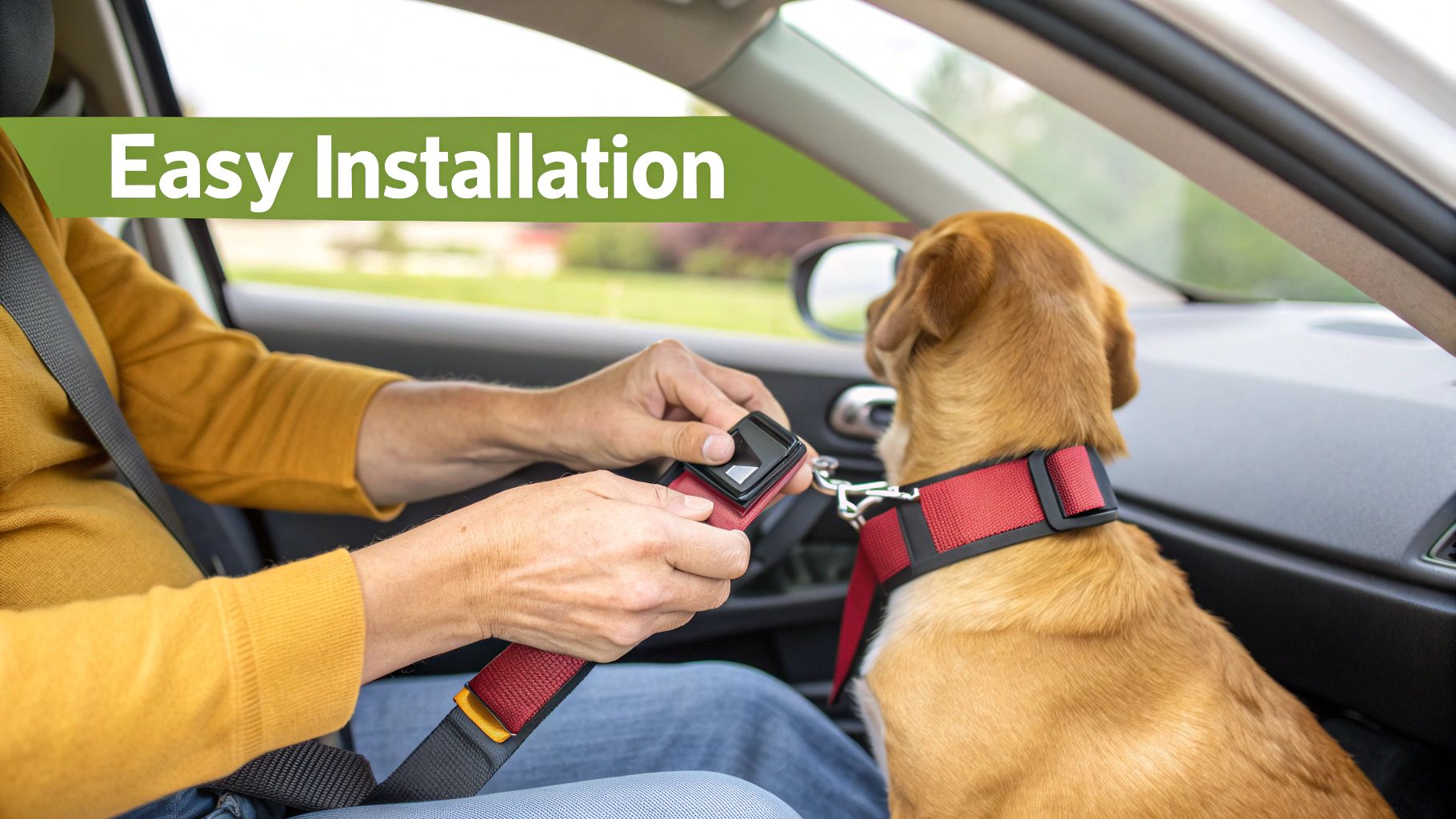
Owning the best safety gear you can find is only half the battle. A top-tier, crash-tested dog seat belt for large dogs is only as good as its fit and installation. If the harness is loose or the tether isn't anchored correctly, it can fail right when you need it most, completely wiping out the protection you thought you had.
Think of it like a parachute. Just having one isn't enough—knowing how to put it on and double-check every strap is what actually keeps you safe. Let's walk through how to get it right so you can hit the road with confidence.
Achieving the Perfect Harness Fit
Everything starts with a properly fitted harness. One that's too loose is a major escape risk, and in a collision, it won’t distribute the impact forces correctly. But if it's too tight, it can chafe your dog and even restrict their breathing.
The goal is a snug, secure fit that isn’t constricting. The easiest way to check this is with the "two-finger rule." After you've adjusted all the straps, you should be able to slide two fingers (one on top of the other) between the harness and your dog's body.
- Chest Girth: This is your most important measurement. The harness needs to be snug around their rib cage, sitting just behind the front legs.
- Neck and Shoulders: Make sure the straps aren't pinching their neck or getting in the way of their shoulder movement. Your dog needs to be able to move their legs freely.
- Check for Gaps: Give the harness a quick once-over, running your hands along all the straps to feel for any big gaps where a paw could get tangled.
A correctly fitted harness is your first line of defense. It makes sure that if you have to slam on the brakes, the force is absorbed by your dog's strongest points—their chest and torso—instead of their fragile neck.
Securing the Tether for Optimal Safety
With the harness on, the next step is connecting your dog securely to the car. This means finding a solid anchor point and getting the tether length just right.
1. Find a Secure Anchor Point
The most reliable and accessible anchor point is your car's seat belt buckle. Most tethers come with a universal clip that clicks right in, just like a regular seat belt. Another great option is the vehicle's LATCH anchor system, the same metal loops used for child car seats, which are usually tucked into the crease of the back seats. Just never attach the tether to a flimsy plastic cargo hook in the trunk—they aren't designed to handle crash forces.
2. Adjust the Tether Length
This is probably the most critical adjustment you’ll make. The tether needs to be the perfect length to balance safety and comfort.
- Too Long: A tether with too much slack is incredibly dangerous. It allows your dog to build up momentum in a crash before the restraint kicks in, which can cause serious injury or let them slam into the front seats.
- Too Short: On the other hand, a tether that’s too tight will be uncomfortable and stressful, preventing your dog from sitting or lying down and likely making them hate car rides.
The sweet spot allows your dog enough room to sit, stand, and lie down in their seat. But it has to be short enough to keep them from getting to the front seat, jumping out an open window, or being thrown into the footwell. Here’s a simple check: once they're clipped in, see if they can put their paws on the center console. If they can, you need to shorten that tether.
Common Dog Travel Mistakes and How to Avoid Them
Even with the best gear, a few simple slip-ups can completely undo all your efforts to keep your big dog safe on the road. These mistakes are shockingly common, easy to make, and can have devastating consequences.
Think of this as the final check on your safety list. By sidestepping these common pitfalls, you can be confident your dog seat belt for large dogs is giving them the full protection it was engineered to provide.
Mistake 1: Attaching the Tether to a Collar
This is, without a doubt, the single most dangerous mistake you can make. A collar is for ID tags and casual walks, not for taking the brute force of a car crash. Period.
In a sudden stop or collision, a tether clipped to a collar becomes a weapon. It will whip your dog’s head back with terrifying violence, which can easily lead to a broken neck, a crushed trachea, or other fatal injuries. All that impact force gets focused on the most fragile part of their body.
- The Fix: Always, without exception, attach the safety tether to the back D-ring of a high-quality, crash-tested harness. A proper harness is built to spread those intense forces across your dog's much stronger chest and torso, shielding their vital organs and delicate neck.
Mistake 2: Using a Tether That Is Way Too Long
It's a common thought: more slack means more comfort for my dog. But in a moving vehicle, too much freedom is a huge safety gamble. A long tether gives your dog room to build up dangerous momentum before the restraint ever kicks in.
It’s a bit like a bungee cord. That extra length allows them to become a projectile in a crash, letting them slam into the front seats, hit the doors, or even be ejected through a side window in a serious accident.
The point of a tether isn't just to keep your dog in the back seat; it's to minimize their movement during a crash. A correctly adjusted tether gives them just enough room to sit up or lie down comfortably—and nothing more.
Mistake 3: Using a Product Not Rated for Your Dog’s Weight
Safety gear isn't one-size-fits-all. It's all engineered with very specific weight limits. Using a harness and tether made for a 30-pound beagle on your 80-pound Labrador is setting yourself up for catastrophic failure.
The webbing, the stitching, and the metal hardware simply are not designed to handle the massive forces a large dog generates in a collision. A product that's underrated for your dog's weight will likely snap, tear, or completely fall apart right when you need it most, offering zero protection.
- The Fix: Before you even think about buying, check the manufacturer's weight rating. Choose a dog seat belt for large dogs that has been specifically tested and certified for your dog's size. If your pup is right on the line between two sizes, always size up for safety.
Even when they're perfectly secured, some dogs just find car travel stressful. For those pups who get a little nervous, learning some calming techniques can make every trip more enjoyable. You can find some great advice in our guide detailing soothing strategies for a dog anxious in car journeys.
A Few More Questions on Your Mind?
Even after getting the facts straight, it's totally normal to have a few lingering questions. When it's about the safety of a furry family member, you want every last detail buttoned up before making a choice. Let's clear the air on some of the most common things people ask about dog seat belts for large dogs.
Think of this as the final check before you hit the road. Getting these answers will give you the confidence that every car ride is as safe as it can be, bringing peace of mind for you and top-notch protection for your best friend.
Are Dog Seat Belts Actually a Legal Requirement?
This is a great question, and the answer is a bit of a moving target. While there’s no single, overarching federal law that says your dog must be buckled up, the legal landscape is definitely shifting. Many states now have distracted driving laws on the books that could easily include an unrestrained dog climbing into your lap or causing a scene.
On top of that, a handful of states have already passed specific laws about securing animals in vehicles. The smartest and safest bet is to always use a certified restraint system. This isn't just about avoiding a potential ticket; it’s about doing what's right for your pet, yourself, and everyone else on the road, no matter where your adventures take you.
A proper restraint system isn't just about being compliant with local rules. It's a fundamental part of responsible pet ownership and providing the highest standard of care for your dog.
But Can My Dog Lie Down and Get Comfortable?
Absolutely. The best dog seat belts for large dogs are engineered for both crash-tested safety and comfort for the long haul. The magic is in the adjustable tether.
You can easily set the length to give your dog enough slack to sit, stand up, and curl up for a nap in their seat. The whole point is to give them freedom of movement within a contained, safe zone. This way, they can settle in and relax for the ride, but they're still protected from being thrown forward during a sudden stop or collision.
How Do I Pick the Right Harness Size?
Getting the sizing right is non-negotiable—you absolutely cannot guess on this one. Don't rely on breed standards or what you think your dog weighs. The only way to do it right is with a soft measuring tape.
- Measure Their Chest Girth: Wrap the tape around the widest part of your dog's chest, which is usually right behind their front legs. Get a snug, but not tight, measurement.
- Consult the Sizing Chart: Take that exact number and compare it to the manufacturer's sizing chart. Every brand is different, so always check their specific guide.
- Do the Two-Finger Check: After you've put the harness on and adjusted it, you should be able to slide two fingers comfortably between any of the straps and your dog's body. This ensures it's secure enough to do its job in a crash but not so tight that it's digging in or restricting their breathing. A perfect fit is everything.
Ready to turn every trip into a safe and happy adventure? Take a look at the collection of premium, safety-tested travel gear at Pet Voyages and find the perfect restraint to protect your best friend on the road.